



ELLICOTT CITY, Md. — While the capital argues, Serving the Humanity brings 150 leaders together to prove that hope is a better strategy than despair. On a holiday weekend typically reserved for quiet family dinners and leftovers, the residence of Mian Irfan Yaqub became an unlikely epicenter of civic dialogue this Saturday. Inside, nearly 150 community members, activists, and elected officials packed the room, shoulder-to-shoulder, defying the usual Thanksgiving lull to engage in a conversation about the precarious state of American unity.
The gathering, organized by the non-profit Serving the Humanity, was ostensibly a reception for the newly elected U.S. Congressman Johnny Olszewski Jr. However, it quickly evolved into something more profound, gathering leaders to prove hope trumps despair as the capital argues, mirroring how the Pakistani-American community in Maryland is asserting itself as a vital bridge in an increasingly polarized political landscape.
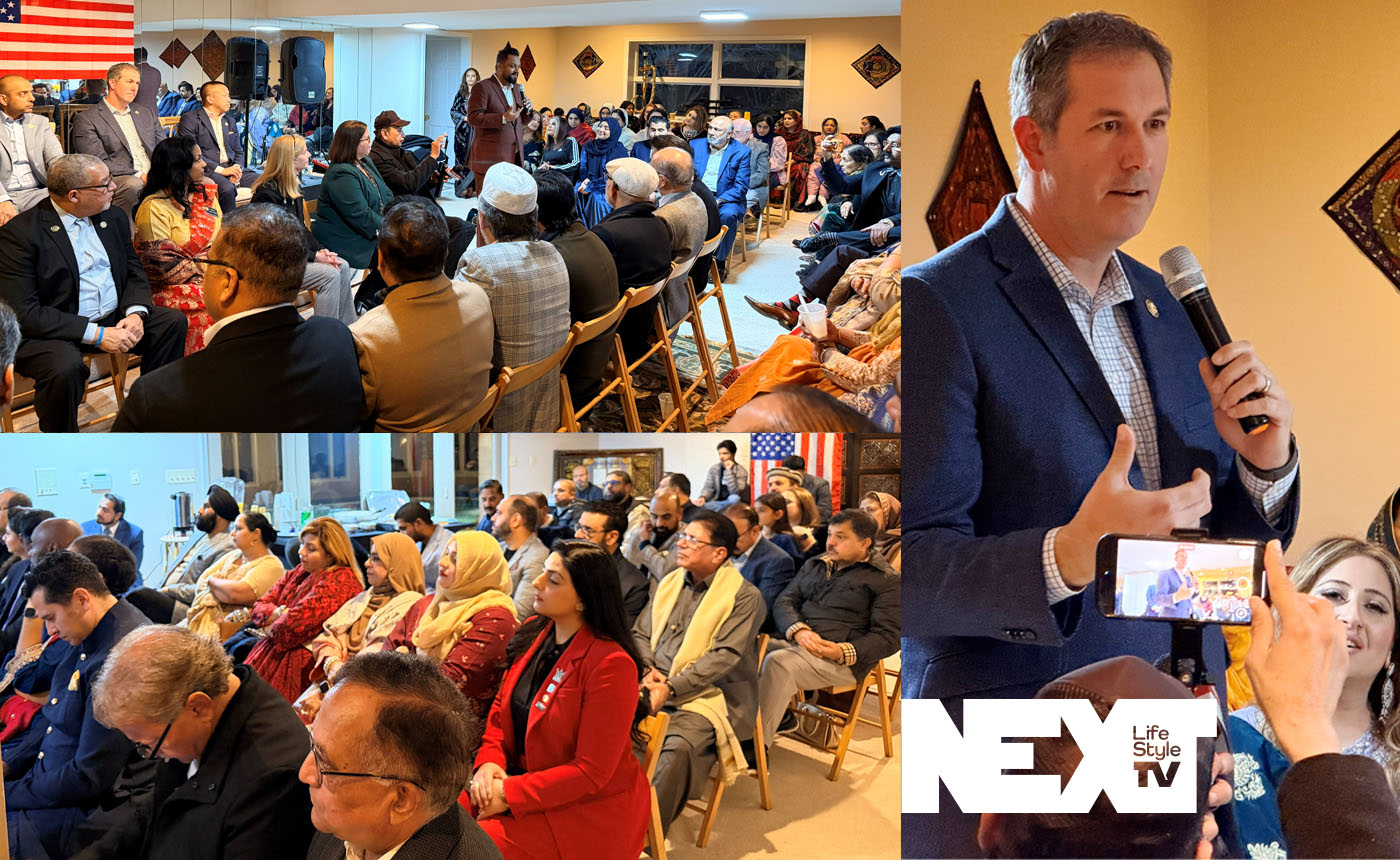
Mr. Olszewski, taking the stage before a “fully packed” house, did not offer a standard stump speech. Instead, he invoked a metaphor for the current American condition: the “escape room.”
In a packed Maryland living room, Johnny Olszewski Jr. argues that the only way out of America’s political “escape room” is together.
“You walk in thinking you’re going to get out of these escape rooms very fast,” Olszewski told the crowd. “And you learn that it actually takes a lot more time than you expect.”
While the capital argues, Serving the Humanity brings 150 leaders together to prove that hope is a better strategy than despair. For the Congressman, the “escape room” represents a nation locked in cycles of misinformation, anger, and division. His prescription for finding the key was simpler than one might expect from Washington: radical collaboration. Recounting his own razor-thin victory in a past executive race—won by a mere 17 votes—he reminded the attendees that power lies in the margins of participation. “You are going to fail without help,” he warned, noting that the only way out of the political “puzzle” is to work together across lines of difference.
A Convergence of Leadership
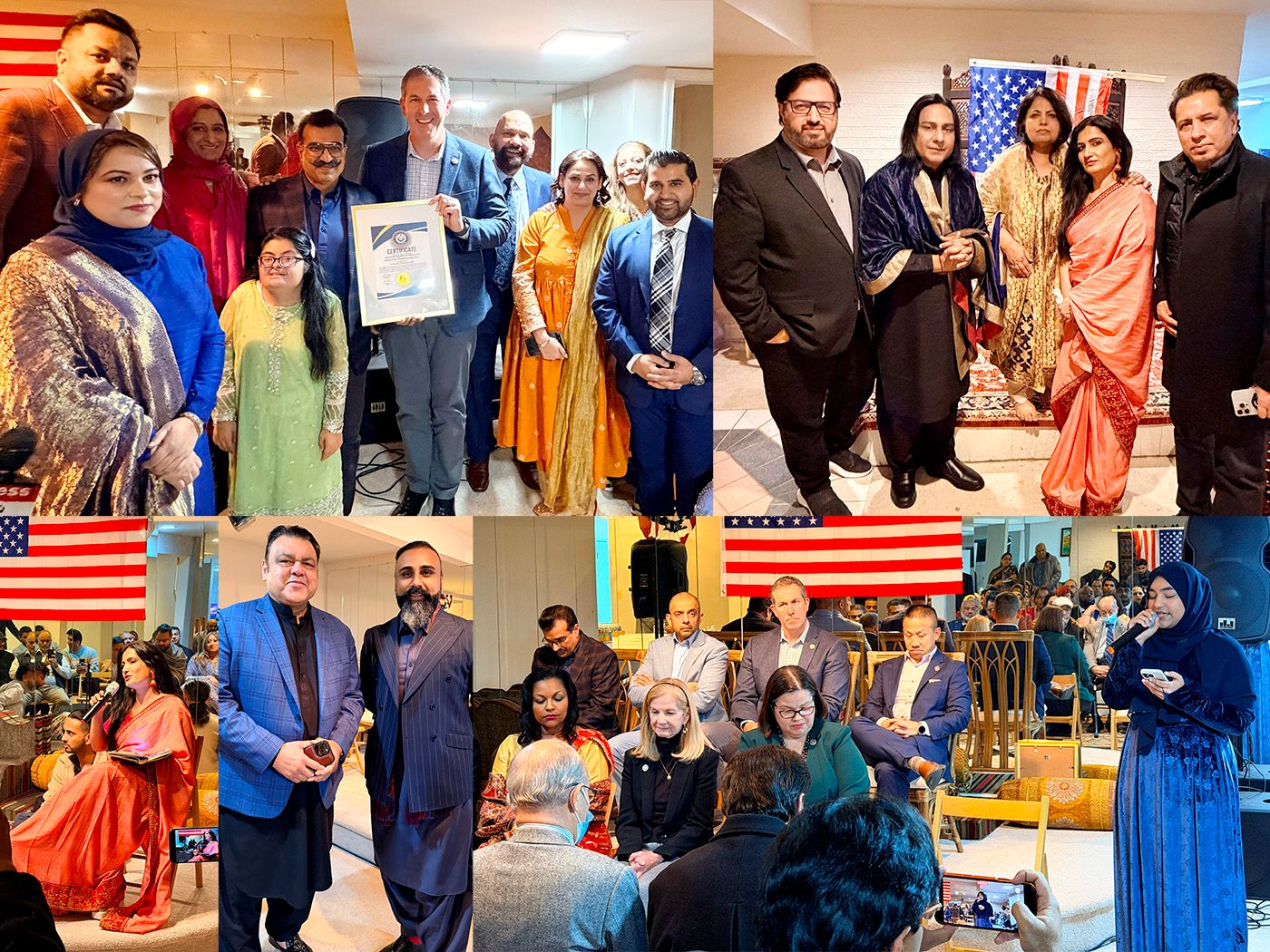
The event was a testament to the convening power of Serving the Humanity. Under the leadership of Chairman Mian Irfan Yaqub, who hosted the event, along with CEO Salman Bhatti, COO Ahmed Rana, and CFO Ayaz Jarral, the organization has positioned itself as a conduit between the South Asian diaspora and the halls of power in Annapolis and Washington.
“We are deeply humbled to bring our community together during this season of gratitude,” said Chairman Mian Irfan Yaqub, reflecting on the turnout. “I want to extend my heartfelt thanks to Congressman Olszewski, Secretary Chaudhry, Senator Lam, and all our esteemed delegates for not just attending, but for truly listening. Tonight proves that when we open our doors and our hearts, we strengthen the very fabric of our democracy.”
The sheer density of political capital in the room underscored this influence. The delegation included Maryland Secretary of General Services Atif Chaudhry—himself a symbol of the representation Olszewski championed in his remarks—as well as Maryland State Senator Clarence Lam. They were joined by a robust slate of Delegates, including Natalie Ziegler, Vanessa Atterbeary, Jessica Feldmark, and Sean Stinnett.
The presence of such a broad coalition of state and federal officials at a private residence on a holiday weekend signals a shift: proving that hope is a more effective strategy than despair even while the capital argues because Serving the Humanity brings 150 leaders together to engage in meaningful dialogue.
An Engaged Electorate
The evening was far from a passive lecture. Following the formal remarks, the room transformed into a vibrant town hall. Audience members seized the opportunity to engage directly with the panelists and Congressman Olszewski, posing sharp, thoughtful questions that ranged from local educational policies to national economic concerns.
Attendees described the atmosphere as electric, appreciating the rare accessibility of their representatives. “It was refreshing to have a real dialogue, not just soundbites,” one guest remarked. Even as the capital argues, Serving the Humanity proved that bringing together 150 leaders creates a dialogue of hope over despair. The consensus in the room was one of appreciation—not just for the answers given, but for the willingness of the officials to stand in a living room and face the community head-on.
Beyond Politics: A Cultural Synthesis
While the evening was anchored in political discourse, it was buoyed by cultural resonance. The organizers, including Youth Engagement Director Usman Sarwar Khan and a robust Women’s Wing featuring Dr. Sonia Rana, Mrs. Sobia Aslam, Mrs. Yasmin Salman, and Shehla Jarral, ensured the event transcended a typical town hall.
The night concluded not with a gavel, but with a melody. Ustad Shafqat Ali Khan, a legendary figure in classical music, delivered a live performance that captivated the room. For an audience navigating the complexities of identity in America, Khan’s performance served as a reminder that heritage and citizenship are not mutually exclusive, but mutually reinforcing.
“Better to Hope Than Despair”
The atmosphere at the Ellicott City residence stood in stark contrast to the cynicism often dominating the national mood. In his closing remarks, Congressman Olszewski reflected on the “new reality” of American politics, urging the crowd to reject fatalism.
“In all things, it is better to hope than despair,” Olszewski said, quoting a mantra he keeps in his office. “Because if we focus on the despair, that’s all we’re going to do.”
As the 150 guests dispersed into the Maryland night, the message was clear. The “escape room” of modern division is daunting, but as demonstrated by the coalition assembled by Serving the Humanity, no one has to try to solve the puzzle alone while the capital argues, proving yet again that bringing 150 leaders together shows hope is a better strategy than despair.