

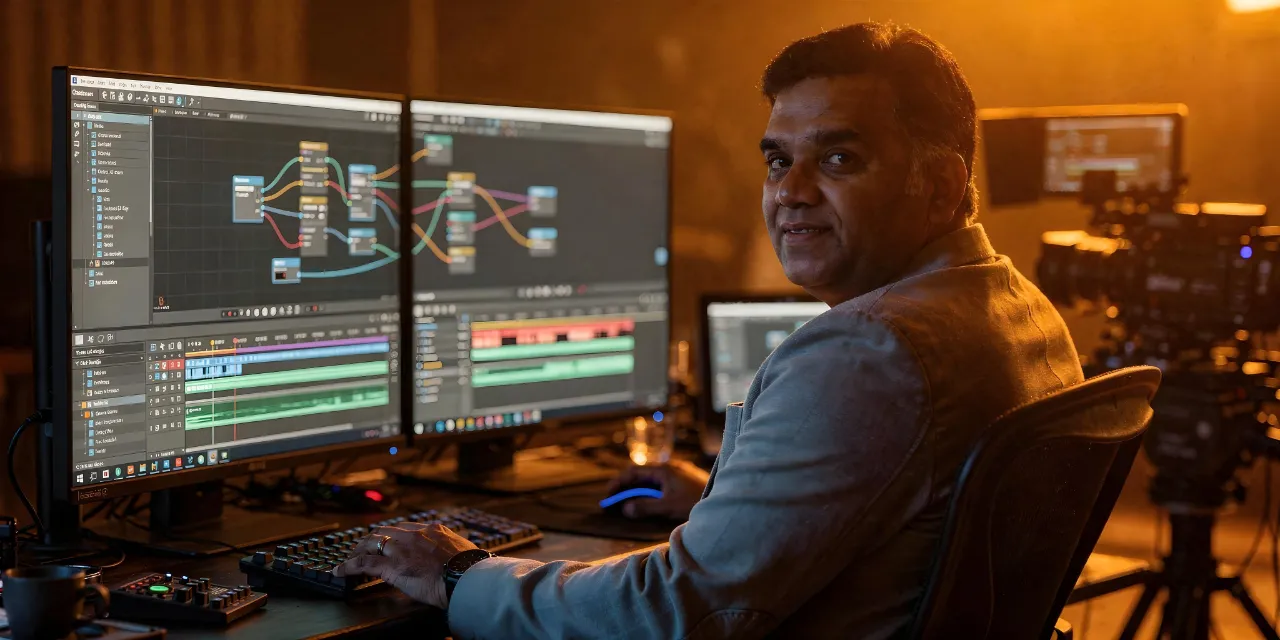

ATLANTA — Two decades ago, the digital tools required for high-end 3D animation and visual effects were largely locked behind the gates of major Hollywood studios. It was the start of “The Art of Invisible Effects: Naseer Haider Siddiqui’s Cinematic Odyssey.” For a young artist in Pakistan, access was scarce. Formal training was virtually nonexistent. It was in this environment that Naseer Haider Siddiqui began to decode the intricate mathematics and artistry of digital filmmaking on his own.

Today, Mr. Siddiqui operates out of the United States, serving as a visual effects supervisor and filmmaker with a portfolio that spans three continents. His trajectory—from the burgeoning media landscape of Karachi to the skyscrapers of Dubai and the soundstages of Atlanta—mirrors the evolution of the global film industry itself. Moreover, it exemplifies Siddiqui’s personal cinematic odyssey in mastering the art of invisible effects.
“When I started, we were fighting to get the technology to work,” Mr. Siddiqui said in a recent interview.
“Now, the technology is accessible to everyone. The challenge has shifted. It is no longer about how many pixels you can render, but whether those pixels make the audience feel something. If the visual effects don’t serve the heartbeat of the story, they are just noise.”
The Dubai Crucible
In 2005, seeking a broader canvas, Mr. Siddiqui relocated to the United Arab Emirates. It was a time of rapid acceleration for the region. Dubai was transforming into a global media hub, and the demand for sophisticated visual content was skyrocketing.
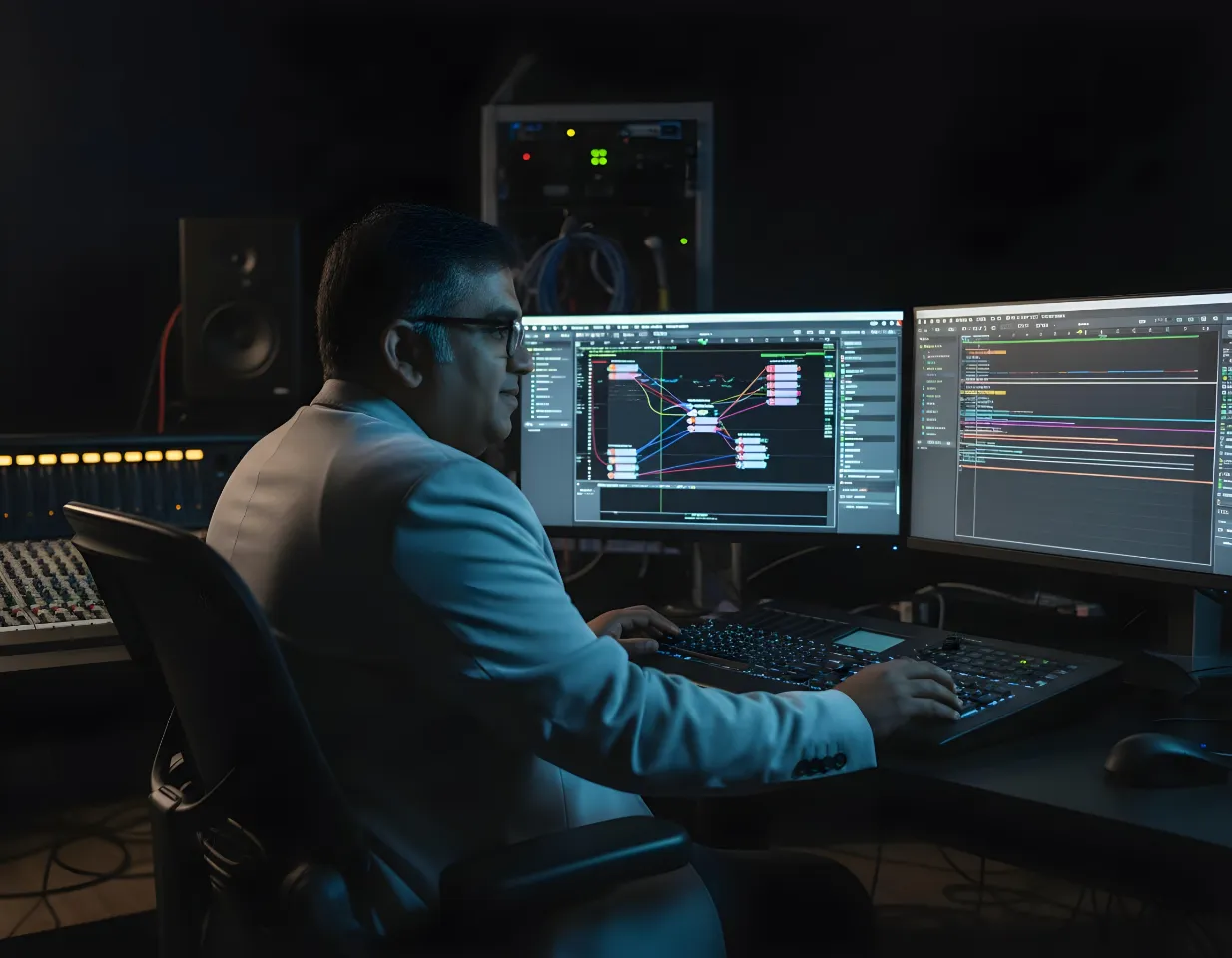
There, he founded Black Bird Motion Media. The studio distinguished itself by moving away from standard commercial templates. It focused instead on the art of invisible effects in 3D animation with live-action cinematography. Over the ensuing years, the studio handled a diverse array of projects, ranging from broadcast commercials to complex drone cinematography. Drone technology was then in its infancy.
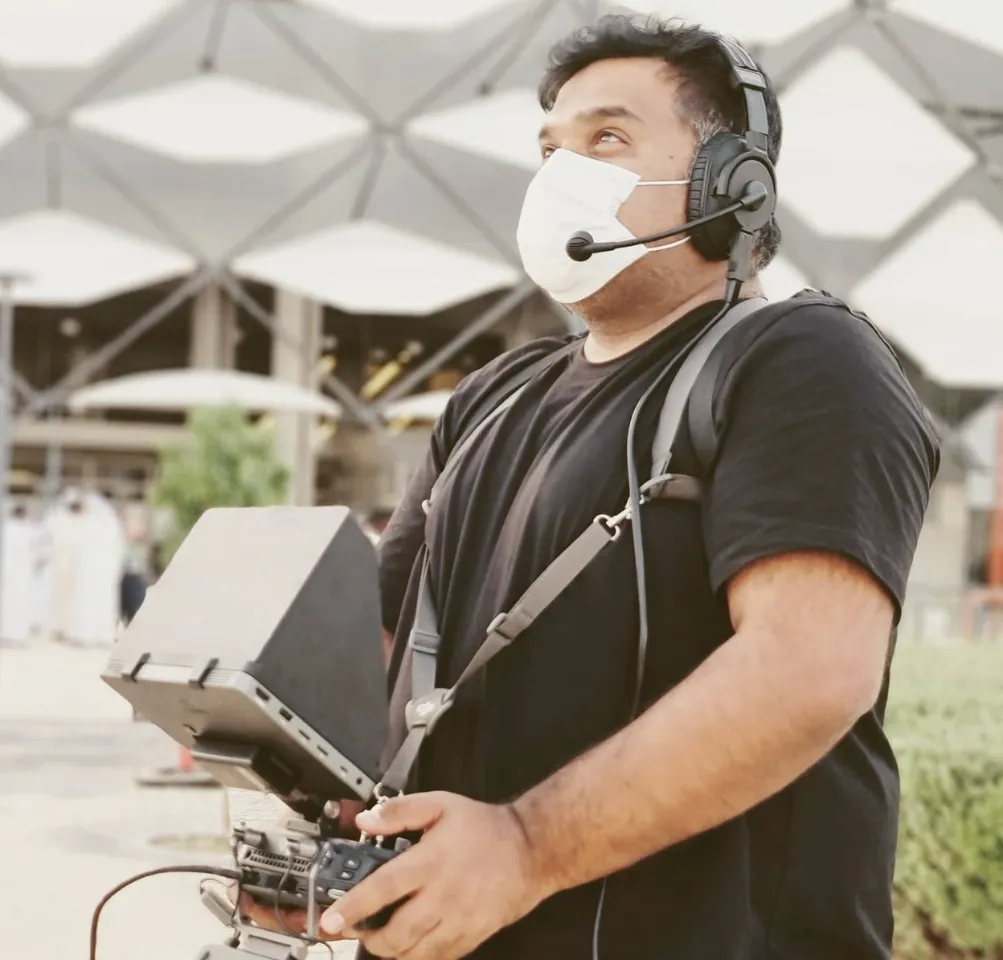
It was during this period that Mr. Siddiqui honed the technical versatility that would define his later work. Managing international collaborations required him to act as a bridge. He translated the technical requirements of Western production houses to the on-ground realities of Middle Eastern filming locations. This showcased another chapter in his cinematic odyssey.
‘Exfil’ and the Shift to Narrative
While his commercial work established his technical credentials, it was his short film, Exfil, that marked his transition into serious narrative filmmaking.
Short films are often constrained by budget, usually sacrificing visual fidelity for story. Exfil attempted to break that mold. Utilizing his background in VFX, Mr. Siddiqui crafted a visually dense, action-oriented narrative that rivaled the production value of feature-length studio films. The project garnered international attention on the festival circuit. It served as a proof-of-concept for how independent filmmakers could leverage high-end effects to tell intimate, human stories. This shift exemplifies Siddiqui’s cinematic journey through the art of invisible effects.
A Global Perspective
Mr. Siddiqui’s recent move to the United States represents the latest chapter in a career defined by mobility. As the industry becomes increasingly decentralized—with production occurring in Atlanta, post-production in London, and on-set supervision in Dubai—his cross-cultural experience has become a distinct asset. It highlights Siddiqui’s cinematic odyssey through the art of invisible effects.
This global perspective was recently recognized by The Hollywood International Film Festival in Washington, D.C., which invited Mr. Siddiqui to serve as a jury member. In this capacity, he evaluated the work of emerging filmmakers. He brings a critical eye sharpened by twenty years of navigating the technical constraints of the medium.
As the lines between production and post-production blur, filmmakers like Naseer Haider Siddiqui represent the new standard. They are artists who are as comfortable with the code of a render engine as they are with the emotional arc of a script. This trait is a key testament to The Art of Invisible Effects: Naseer Haider Siddiqui’s Cinematic Odyssey.