

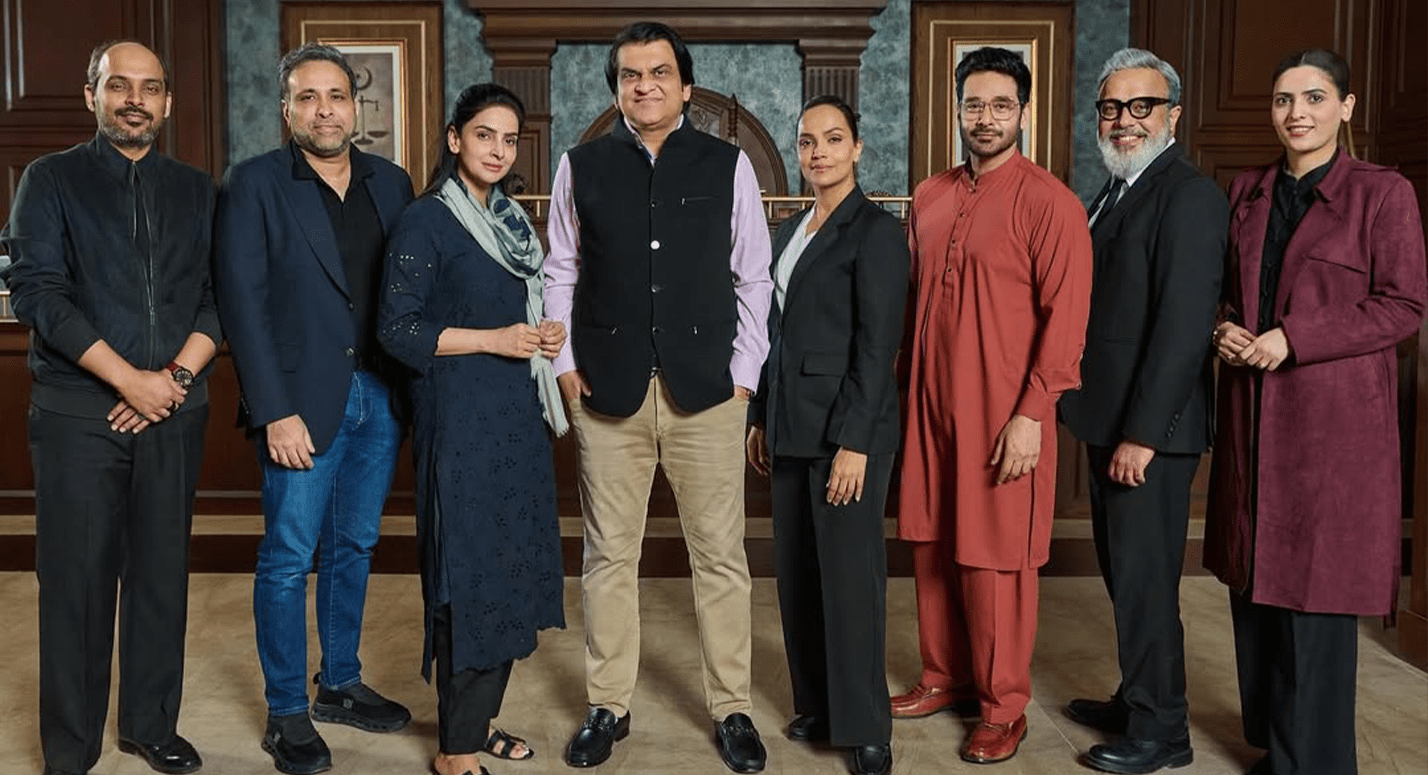

As Case No. 9 approaches its finale this week, the drama highlights a noticeable shift in what Pakistani audiences are ready to engage with during prime time.
For years, Pakistani television dramas have largely focused on family dynamics, romantic relationships, and household conflicts. Themes such as sexual violence, abuse, and systemic injustice were often avoided. They were considered too sensitive or controversial for mainstream viewership. That narrative, however, is slowly changing. Shows like Udaari, Dil Na Umeed To Nahi, Ankahi Sachaiyan, Kabuli Pulao, and now Case No. 9 are pushing boundaries by addressing issues once deemed off-limits. What sets Case No. 9 apart is its emphasis on the legal process itself. It offers viewers a rare, detailed look into courtroom proceedings and the justice system.
Airing on Geo TV, the drama features Saba Qamar as Sehar Moazam, a rape survivor determined to hold a powerful man, Kamran, accountable. A recent episode delivered a major turning point. This left audiences stunned and deeply invested.
He explained that the team’s primary goal was awareness and responsible storytelling. According to Hussain, strict emotional and moral boundaries were maintained during filming. Moreover, self-censorship played a key role due to the gravity of the subject matter.
Junaid Khan, who portrays Rohit, spoke about the educational impact of socially driven dramas. He noted that such narratives help inform society, especially women, about their rights and the steps they can take when facing abuse. He also admitted that before the project, he himself lacked awareness about the legal punishments associated with rape cases. This was a gap in knowledge the drama aims to address.
Actor Faisal Qureshi emphasised that Case No. 9 reflects real societal issues rather than fictional exaggeration, particularly workplace harassment faced by many women. He added that the show also serves as a guide. It helps young viewers understand the risks and the available legal paths.
The drama’s authentic courtroom setup has also earned praise. In a podcast with Mubashir Hashmi, Rushna Khan highlighted the uniqueness of Case No. 9. She noted that many actors experienced working in a courtroom drama for the first time. She expressed hope that more such projects would follow.
Audience reactions, however, remain mixed. While many viewers welcome these bold conversations, others feel such narratives challenge traditional family-oriented storytelling. Still, one thing is clear: Pakistani television is evolving beyond escapism into a space for meaningful dialogue. Powerful lines like Sehar’s — “agar society mera sath nahi de sakti tu kam az kam mujh par mazeed zulm na kare” — amplify the voices of survivors. They bring urgent social realities into the mainstream.
Moreover, they wonder whether Pakistani prime-time television will continue to make room for stories that demand courage, empathy, and change.